What Scripture Says About Truth
On the corruption of language, the renaming of created realities, and the coercion of speech in our institutions.
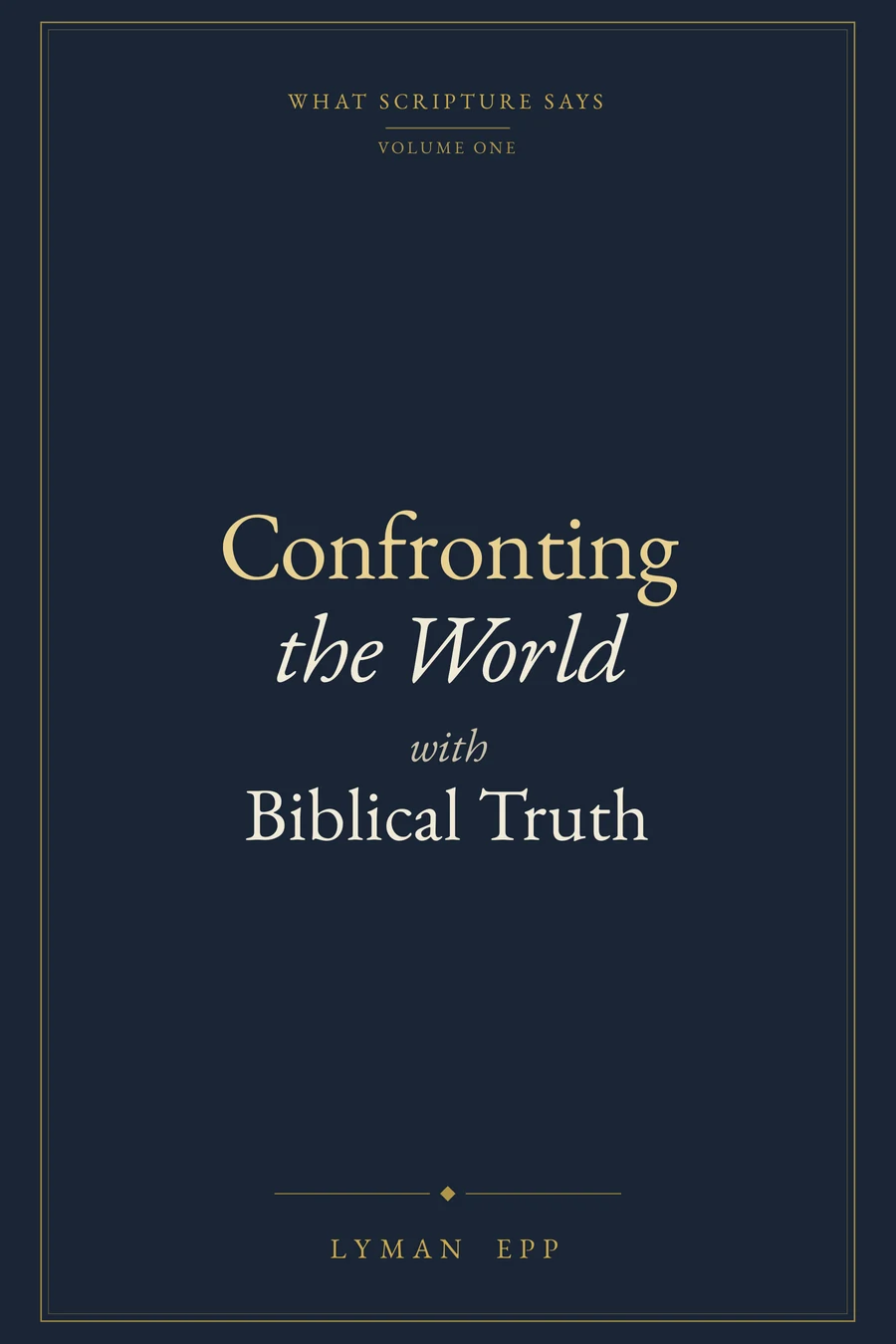
What Scripture Says — Volume 1
What Scripture Says, Volume 1
Twenty-one chapters on what the Bible actually says — to a culture that has decided what it should say instead.
Available now on Amazon. Choose your format on the Amazon listing.
Where this book belongs
This book addresses public and cultural questions, but it does so as part of the What Scripture Says series. The governing authority is Scripture, the intended reader is the Christian reader willing to be corrected by the text, and the method is biblical argument rather than political commentary.
What this book is
What Scripture Says is a thesis, not a description. It does not mean “what various thoughtful people have concluded when reading Scripture” or “what the tradition has said and what the text might be read to support.” It means what the text actually says — what the words mean in their context, what the arguments require, what the whole of Scripture, properly handled, demands. The title makes a claim about both method and authority, and the claim is not modest.
That is intentional. One of the defining marks of the present moment is the systematic replacement of that kind of claim with something softer. A passage says something specific. The response is not to dispute the words but to complicate the question — to introduce considerations that make a plain reading seem hasty or unkind, to reframe the topic until the text’s plain statement is no longer the center of the discussion. The maneuver is always dressed in the language of thoughtfulness. The effect is always the surrender of ground that Scripture itself refuses to surrender.
This book refuses to go along with that.
If Scripture corrects an argument in this book, the argument should be discarded. If Scripture overturns a conviction the reader has held for years, the conviction should be surrendered. Confidence is only a virtue when it rests on truth.
What’s inside
The book opens with foundations: what Christian doctrine is and why it matters, what the Bible claims to be, and what is actually at stake when truth is redefined. From there it presses into the questions the church most often handles evasively — marriage, desire, sexuality, departure from the faith, the sanctity of life. Then to the political and cultural pressures arriving at the church’s door: Marxism, political violence, antisemitism, nations and civilization, the Christian West. It closes with the false gospels — the systems that use Christian language, inhabit Christian institutions, and lead people somewhere other than Christ.
Selected chapters
On the corruption of language, the renaming of created realities, and the coercion of speech in our institutions.
Marriage as divine institution, not human contract — and what it means that two cannot portray Christ and the church.
The ideological project to detach the words ‘man’ and ‘woman’ from biological reality, and what Scripture requires in response.
Image-bearing humanity from conception to natural death, and the obligations that follow.
Why a system that names oppressors and offers liberation cannot coexist with the gospel that names sinners and offers Christ.
An evangelical Reformed Baptist examination of the Roman communion — its claims, its sacramentology, and the gospel question.
From the introduction
The Bereans examined the Scriptures daily to see whether the things they were being told were true (Acts 17:11). That is the posture this book assumes and the posture it invites. A belief is not an identity. Long-held conviction is not the same as biblical fidelity — and the reader who has confidently believed something for decades has the most reason to bring it carefully back to the text, not the least.
Do not accept these conclusions because they are argued confidently. Test them. Bring them back to the text. If they stand, hold them. If they do not, discard them. That is how the discipline works.
Who this book is for
Most of the books that address these topics are written by scholars for scholars or by pastors for congregations. This one is written by someone who sits in the pew and reads his Bible and wants straight answers to hard questions. If that is your situation too, then this book was written for you.
What Scripture Says — Volume 1
What Scripture Says, Volume 1
Twenty-one chapters on what the Bible actually says — to a culture that has decided what it should say instead.
Available now on Amazon. Choose your format on the Amazon listing.
Continue
Submitting the Church to Biblical Authority takes up the questions Christians dispute among themselves — salvation, law, ethics, the Christian household, the end times, baptism, church order, and the relationship between assumptions and biblical authority.